Homelessness
Homelessness is a complicated problem, but there are many practical ways to help by solving academic and industry problems.
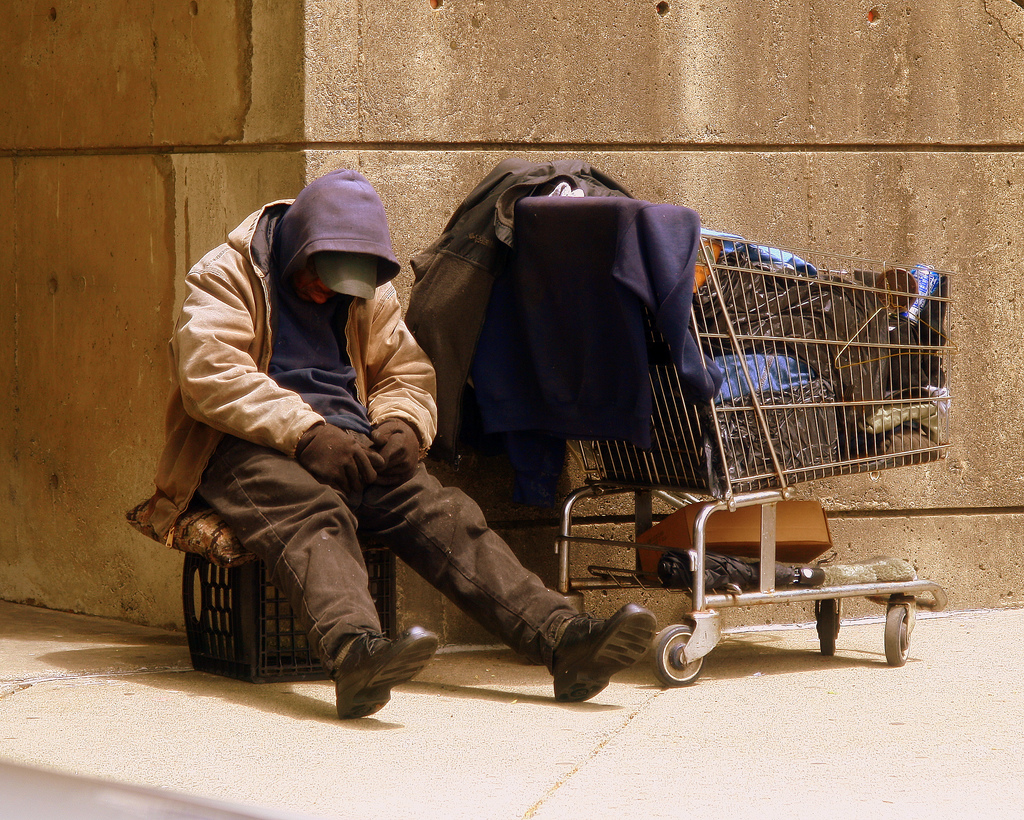
On any given night (based on 2025 data), 770,000 people experience homelessness in the United States – an 18% increase from the previous year and the highest count since tracking began in 2007 ("HUD Releases 2024 Annual Homeless Assessment Report"). This means that roughly 1 in every 430 Americans is homeless on any given night. About 1/3 of this is "unsheltered" and a similar amount is "chronic" homeless (ie, not temporary). 20% of the homeless population is under 18.
The crisis stems from multiple causes, but despite its complexity, there are many clear opportunities to reduce homelessness. Cities like Houston have cut their homeless population by 64% over a decade using proven strategies ("How Houston Cut Its Homeless Population by Nearly Two-Thirds").
High-leverage approaches include: (1) Better policies, (2) More affordable housing, and (3) Tackling root causes.
1. Better policies clearly help. "Housing first" programs first put people in housing and then support them with job training and other needs, and these approaches have not only worked (Houston and Utah are good examples), but they have also cost less than leaving people on the street because of emergency healthcare, police, and jail costs.
2. Put simply, there isn't enough housing. There are 34 affordable housing units for every 100 low-income renter families. The scarcity matters - broadly, every $100 increase in median rent increases homelessness by 9%. There are lots of innovations in building cheapter housing:
(A) Construction techniques, like modular and prefabricated housing which have seen success in California, 3D-concrete-printing, and new materials like cross-laminated timber.
(B) Innovations in location and land use, like building housing on top of commercial strip-malls, re-purposing shipping containers, incentivizing "accessory dwelling units" (backyard cottages).
(3) We also need to tackle the root causes of homelessness, including rental assistance, eviction prevention, support for people exiting instutions like prisons, psychiatric hospitals, and foster care, and stronger domestic violence services. Of note, domestic violence is the second most-cited cause of homelessness for women in many regions.
Overall - there are lots of opportunities to innvoate and help this problem - in political science, material science, supply chain management, engineering.
Works Cited
"Basic Facts About Homelessness: New York City." Coalition for the Homeless, www.coalitionforthehomeless.org/basic-facts-about-homelessness-new-york-city/. Accessed 3 Jan. 2026.
"endhomelessness.org." National Alliance to End Homelessness, endhomelessness.org/state-of-homelessness/. Accessed 3 Jan. 2026.
"How Houston Cut Its Homeless Population by Nearly Two-Thirds." Governing, www.governing.com/housing/how-houston-cut-its-homeless-population-by-nearly-two-thirds. Accessed 3 Jan. 2026.
"Housing First: Utah ends homelessness and provides shelter for all." The Better News, thebetter.news/utah-housing-first-homeless/. Accessed 3 Jan. 2026.
"HUD Releases 2024 Annual Homeless Assessment Report." National Low Income Housing Coalition, nlihc.org/resource/hud-releases-2024-annual-homeless-assessment-report. Accessed 3 Jan. 2026.
"HUD releases January 2023 Point-in-Time Count Report." United States Interagency Council on Homelessness, www.usich.gov/news-events/news/hud-releases-january-2023-point-time-count-report. Accessed 3 Jan. 2026.
"Male homelessness in the United States." AIBM, aibm.org/research/homelessness-in-the-united-states/. Accessed 3 Jan. 2026.
"Myth #1: Most Homeless People Are Either Mentally Ill or Have a Substance Use Disorder." United to End Homelessness, unitedtoendhomelessness.org/blog/myth-most-homeless-people-are-either-mentally-ill-or-have-a-substance-use-disorder/. Accessed 3 Jan. 2026.
National Health Care for the Homeless Council. Children, Youth & Families. National Health Care for the Homeless Council, https://nhchc.org/clinical-practice/homeless-services/special-populations/children-youth-families/. Accessed 3 Jan. 2026.