Malaria
Why does malaria still kill 600,000 people a year?
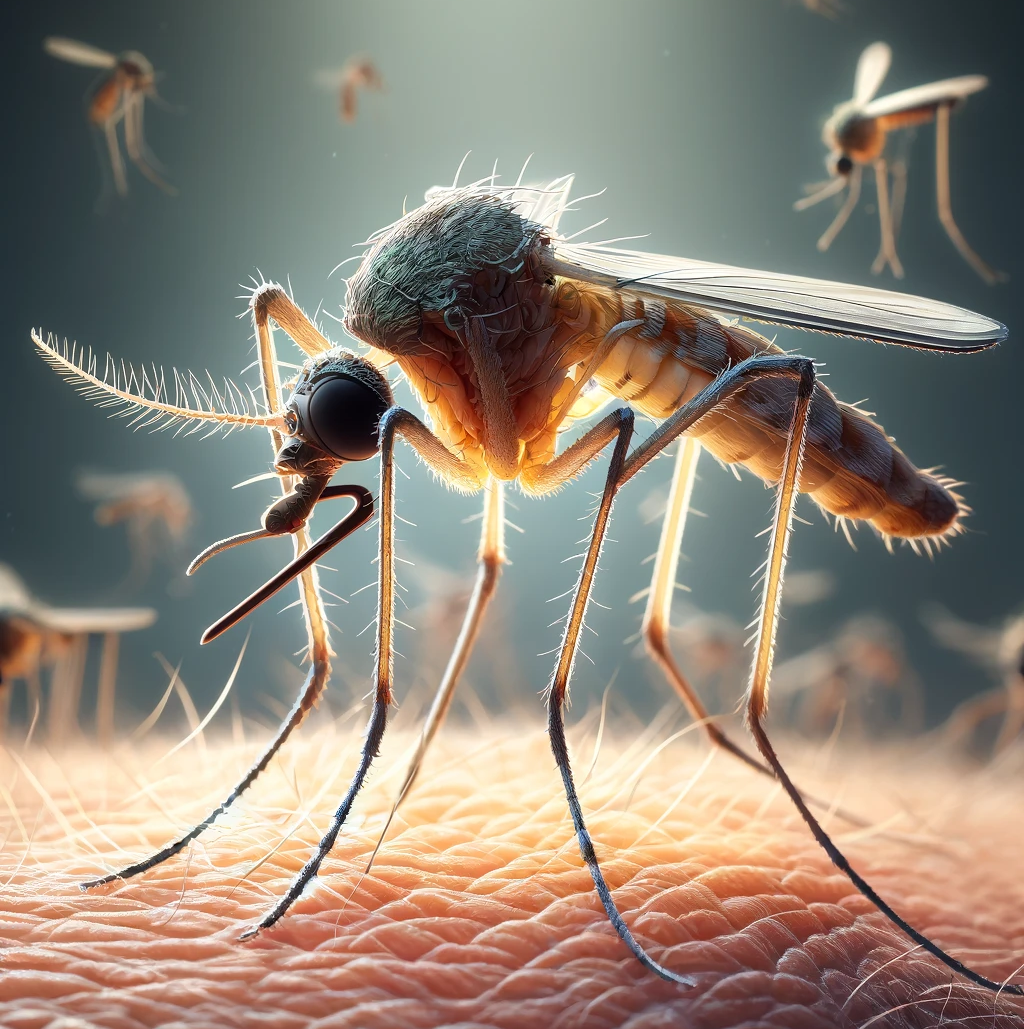
Today, malaria kills roughly 600,000 people per year – most of them young children in sub-Saharan Africa [1]. Each year it causes around 250 million illnesses across the tropics [1]. About 95% of malaria fatalities occur in the WHO African Region, and roughly three-quarters of those who die are children under five [1][2]. Beyond the tragic loss of life, the disease imposes a huge burden, causing up to half a billion lost workdays in Africa annually [3]. The crisis persists despite decades of tools and funding because (1) the mosquito vectors adapt and thrive – highly efficient African Anopheles species bite year-round and are evolving resistance to insecticides [1]; (2) the Plasmodium parasites are resilient – the deadliest species, P. falciparum, is hard to target and is developing drug resistance [4]; and (3) many high-burden regions face weak health systems, poverty, and environmental factors that undermine consistent malaria control [1][4]. At its core, the bottleneck is the parasite's complex life cycle and its mosquito vector have proven hard to completely disrupt, and fragile public health infrastructures struggle to reach everyone at risk.
There are a number of promising approaches being explored to help:
1. Innovating mosquito control tools to cut transmission at the source. Malaria cannot spread without its mosquito vehicle. Some innovations being developed here are:
(A) Next-generation insecticidal nets with dual active ingredients. Standard bed nets are treated with a single insecticide (often a pyrethroid), but in many regions mosquitoes have developed resistance. New dual-active ingredient nets combine two different insecticides, such as a pyrethroid plus chlorfenapyr, to kill resistant mosquitoes [5]. In field trials, dual-AI nets produced roughly 45% fewer malaria cases compared to traditional nets in the same areas [5].
(B) New insecticides for indoor residual spraying. After mosquitoes evolved resistance to older classes like pyrethroids and DDT, researchers introduced novel compounds (e.g. organophosphates and neonicotinoids) that can be sprayed on walls to remain lethal to mosquitoes for months. One newer spray with chlorfenapyr has shown success in killing pyrethroid-resistant mosquitoes and reducing malaria infection in villages.
(C) Gene drives to suppress or modify mosquito populations. Using CRISPR-based techniques, researchers have created mosquitoes that carry genes causing infertility or making the mosquito immune to the malaria parasite [6]. A gene drive ensures these traits are inherited by most offspring, rapidly propagating the change in the wild mosquito population. One team recently used a CRISPR gene drive to insert a naturally occurring gene variant that makes mosquitoes resistant to Plasmodium infection [6]. In lab studies and controlled field trials, gene-drive mosquitoes have shown they can spread the desired genes to a large fraction of a mosquito population within a few generations [6]. If this works at scale, it could theoretically eradicate local mosquito vectors and stop malaria transmission permanently in those areas.
2. Deploying new vaccines and treatments to break the parasite's cycle. Even the best mosquito control won't catch every infectious bite, so building human immunity and curing infections is crucial. Some innovations being developed here are:
(A) Malaria vaccines that prime the immune system. The first vaccine, RTS,S (Mosquirix), reduced clinical malaria cases by about 36% over four years in young children [7]. By 2023, over 2 million African children had received RTS,S in Ghana, Kenya, and Malawi through pilot programs, leading to a vaccine-attributable 13% drop in child mortality in those areas [8]. A second vaccine called R21/Matrix-M (approved in 2023) achieved about 75% efficacy against clinical malaria with a booster dose in areas of seasonal transmission [8]. Giving the vaccine seasonally has shown around 70–80% reduction in cases in that season when combined with other preventive measures [8].
(B) New drug combinations to overcome resistance. A novel compound ganaplacide paired with lumefantrine achieved a 97% cure rate in a 2025 Phase 3 trial across Africa, slightly better than the best existing artemisinin-based combination therapy, and remained effective against resistant parasite strains [4]. Ganaplacide works differently from artemisinin – it disrupts the parasite's ability to survive inside red blood cells and can even kill dormant parasite forms in the liver [4]. Another strategy to outpace resistance is using triple-drug therapies (adding a second partner drug to the artemisinin-based regimen), which early studies suggest can cure multi-drug resistant malaria and delay the spread of resistance [9][10].
(C) Seasonal malaria chemoprevention for children. SMC involves giving healthy children a full treatment dose of antimalarial drugs at regular intervals during the high transmission season to prevent infections. In 2023, a record 53 million children under 5 received seasonal preventive medication in the Sahel countries, resulting in significant drops in malaria cases during peak months [3].
3. Strengthening health systems and surveillance to eliminate malaria at its roots. Reaching remote communities with consistent prevention and treatment requires strong delivery systems. Some innovations being developed here are:
(A) Community health worker programs that bring care to villages. Training local volunteers to distribute bed nets, test for malaria with rapid diagnostic tests, and provide treatment has dramatically increased access in rural areas. These programs ensure that even the most remote households can get protection and care.
(B) Mobile technology and real-time surveillance systems. Digital health platforms now track malaria cases in real-time, allowing health officials to deploy resources where outbreaks are emerging. Mobile money systems also enable conditional cash transfers tied to net usage or clinic visits, improving compliance with prevention measures.
(C) Integrated vector management combining multiple control methods. Rather than relying on one tool, programs now combine bed nets, indoor spraying, larvicides (to kill mosquito larvae in water), and environmental management (draining breeding sites) for maximum impact. This multi-pronged approach makes it harder for mosquitoes to evade control.
Work Cited
[1] Centers for Disease Control and Prevention. Malaria Cases Worldwide. CDC, www.cdc.gov/malaria/php/impact/index.html.
[2] UNICEF. Child Malaria Deaths. UNICEF Data, data.unicef.org/topic/child-health/malaria/.
[3] ALMA (African Leaders Malaria Alliance). Africa Malaria Progress Report 2024. ALMA, alma2030.org/heads-of-state-and-government/african-union-malaria-progress-reports/2024-africa-malaria-progress-report/.
[4] Health Policy Watch. New Malaria Drug Candidate Exceeds Cure Rate for Standard ACTs in Phase 3 Trial. Health Policy Watch, healthpolicy-watch.news/new-malaria-drug-candidate-exceeds-cure-rate-for-standard-acts-in-phase-3-trial/.
[5] African Leaders Malaria Alliance. Why Dual-AI Nets Could Be Uganda's Game Changer in Ending Malaria. ALMA, alma2030.org/news/why-dual-ai-nets-could-be-ugandas-game-changer-in-ending-malaria/.
[6] Yeo, Yitbarek, et al. "A Single Genetic Tweak Stops Mosquitoes from Spreading Malaria." The Scientist, www.the-scientist.com/a-single-genetic-tweak-stops-mosquitoes-from-spreading-malaria-73202.
[7] Laurens, Matthew B. "RTS,S/AS01 Vaccine Efficacy and Safety." Malaria Journal, vol. 19, 2020. PubMed Central, pmc.ncbi.nlm.nih.gov/articles/PMC7227679/.
[8] World Health Organization. Q&A on RTS,S Malaria Vaccine. WHO, www.who.int/news-room/questions-and-answers/item/q-a-on-rts-s-malaria-vaccine.
[9] Medicines for Malaria Venture. A Crisis in Malaria Treatment Is Coming—We Must Act Faster to Contain It. MMV, www.mmv.org/newsroom/news-resources-search/opinion-crisis-malaria-treatment-coming-we-must-act-faster-contain.
[10] Watson, Olivia J., et al. "Preventing Antimalarial Drug Resistance with Triple Artemisinin-Based Combination Therapies." Nature Communications, vol. 14, 2023, www.nature.com/articles/s41467-023-39914-3.